Showing posts with label G321 Thriller Research. Show all posts

Sunday, 3 April 2011

Comparrison, Lives of others opening and my own


The opening to the lives of others features many conventions of the thriller genre which can also be seen in my own.

The theme seen in the opening is that of interogation and surveillance. This is also the theme in my own opening. The sinsister nature and the exploitation of a humans weakness makes it conventional of the thriller genre. Surveillance is often used in crime and action thrillers as it induces the vulnerable feeling of being watched. For example in Red Road, the people being watched are put in a very weak position and are constantly unaware of their indiscretion.


The scene where the Stasi officer is teaching his class contains a sequence wherein we see an extreme close up of the surveillance equipment. This shot forces us to focus on the device that the officer is using to turn what sounds like a brutal interrogation into a simple lesson. This shot is remeniscant of one of my own in which the camera shows an extreme close up of the radio being used to spy on the antagonist. The focus on the equipment rather than the people removes the human element from the shots, giving them a heartless feel. Over this shot in both there is no music playing. This generates an eerie atmosphere and enhances the conventional coldness of the sequence.


Another similarity between the two can be seen as the respective interogations continue. After the eerie moment where we are forced to focus on the electronics (conventionally inhumane) the one being interogated reveals a secret. This shows how in both, the interrogation has become so intense that the victim has no other option than to tell the truth. The theme of unravelling mysteries is a convention of the thriller genre; this plot device can be seen in the two interogations and further intensifies the shots as a turning point in the story is created.

One difference that we see is the contrasting lighting between the two films. My own uses conventional dim lighting to give a sense of intensity and malice; this is stereotypical of thrillers as it generates the sensation of being trapped. The Lives of Others on the other hand uses very crisp white light which enhances the mechanical feel of the scene, enhancing the inhumane convention.


Finally, the two characters, while physically very different are both aiming for the same result. In The Lives of Others the character is a middle aged man however his passion to discover the truth is remeniscant of the young teenager in my own thriler. Despite having different motives they are both conventional characters of the thriller genre as both harbour a desire to harm a particualr group of people, be it for racial reasons or personal grudge. This may however be considered unconventional as the interogators in both are supposed to be the main charactres who stereotypically wish to prevent such actions. Fo this reason they may be described as more conventional anti-heroes, similar to other thriller characters such as Bruce Wayne in The Dark Knight.


Sunday, 23 January 2011

How does “Leon” follow the conventions of the thriller genre?

The film Leon follows many of the typical conventions of the thriller genre. While many of its features stray from this stereotype it is the “thriller” aspects that create an atmosphere of suspense in the film.

The characters are quite typical of a thriller in some regards, for example the main character (Mathilda) represents a femme fatale nature. Although she is only 13, she is portrayed as if she were grown women. This is shown in the way she looks and behaves. Her clothes combine elements of sex appeal (leggings and a chocker) and young innocence (cartoons on the leggings and a girly French style hair cut.) The innocence shows her vulnerable side (enhanced by the bruises on her face) while aspects such as her cigarette and chocker show a darker or perhaps more lethal side.
Along with the femme fatal character there is also the typical gangsters and the mysterious hit man characters.


Leon uses the conventional method of extremes to generate suspense. The opening scene shows the landscape of the whole city which demonstrates how small the characters seem in comparison and yet their actions have such huge consequences. Furthermore the film uses a multitude of close ups to keep an ambiguous atmosphere around the characters while giving us some basic information about them. this means that we focus on some of the more intriguing factors about the people involved, for example the tinted glasses and the drinking of milk, both of which build foundations for the characters personality.

The settings in Leon are archetypal of the thriller genre; an early example of this being the shady coffee shop where Leon is receiving his contract. Within twenty minutes of the film we have already seen two spiral staircases, a very commonly used element in thrillers as it creates disorientation in the audience’s minds. The use of spiral staircases also allows for opportunities to show vulnerability, for example when Leon is hiding on the stairs the drug dealers cannot gauge where he is and it is when one of them desperately looks down the stairwell that we see just how vulnerable the staircase makes him seem – because of the vast amount of hiding places amongst the different levels.


The use of drugs in Leon is perhaps the most clichéd element of the film. Drugs are very frequently used in thrillers as it has connections to real life as well as creating a huge amount of motives behind the actions seen in thrillers. The gangsters willingness to murder a whole family (including a four year old boy) for the sake of finding 10% of their stock shows just how sinister this mob is. The connotations of gangs and drugs are widely used as they provide reasons for unspeakable things to happen – like the murdering of a child.


The many conventions of the thriller genre seen in Leon make the film a relatively clichéd film, however the way it is portrayed seems to transform the clichéd elements of it into a relentlessly enthralling thriller.

Wednesday, 10 November 2010

Binary Opposites in Alfrod Hitchcocks Psycho

Alfred Hitchcock uses binary opposites as one of his key methods of creating suspense in his films. This is clearly visible in the film Psycho which uses this method on a regular basis to keep the audience in a state of unease.

The film opens on a wide shot of Phoenix Arizona, displaying the humdrum life and wide open spaces of the city and skyline. In contrast to this we next see the claustrophobic, as well as dimly lit, room where Marion and Sam are having their secret affair. This symbolises the openness of the outside world as opposed to the secrecy and deceit of the hotel room. As well as this it also induces an early feeling of being trapped - while the world outside goes on as normal we are stuck in this dreadful situation symbolized by this room. The situation we are in (or rather Marion is in) is the immoral affair which she can not escape from. She is torn between her love for Sam and the fact that they haven’t got the money to make their relationship moral by getting a divorce for Sam. The tension created by this is conventional of the thriller genre

Another binary opposite is the view of money by the different characters. We see the rich father who (although he claims to not have this view) is clearly trying to buy his daughters happiness. This, along with his ability to easily part with $40,000 without a second thought and trust a complete stranger with it, shows that he takes his wealth for granted and views it as a tool to win people over. The later is backed up by his flirtatiousness with Marion; as if he could get her because of his wealth despite his age. The opposite view to this is the one which Marion holds. Although she does wrong by stealing the money, she certainly does not take it for granted. The fact that she was willing to put herself in her position for this money shows her desperation to have it. On the other hand she does hold one similar view in that she intends to technically buy herself and Sam happiness by using to get Sam a divorce as well as make a life together with it. It may be argued that the opposite in this scenario is the position of the characters. The girl is getting a $40,000 house for doing nothing at all while Marion is a working girl who is in desperate need of the money and has no means of obtaining it.

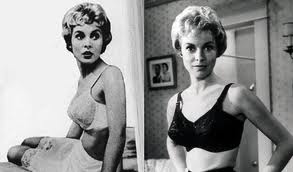
Something which we see from very early on is Marion’s underwear. When we first see her she is trying to do the right thing and confides in Sam about their moral position. This side of Marion is reflected by the pure white underwear that she is donning. The binary opposite to this is seen later on when she has almost certainly made up her mind to steal the $40,000. This side of Marion knows she is doing wrong puts continues to do so in order to fulfill her own needs. The Black underwear which she is now wearing illustrates this dishonest, “tempted by evil” side to her. The black versus the white is an obvious symbol of good versus evil and how our emotions can turn us down these paths.

The split personality seen in Norman is also a binary opposite. While at first we believe Norman to be an honest and kind (if not a bit weird) character we later learn that this is not the case. The opposition shown by this is the kind exterior opposed by the cold blooded, wicked interior. This creates a feeling of confusion as are perception has been deceived leaving us not knowing what to believe.

Norman is also involved in another opposite which is that of predator and prey. We first se this in the image of the mother in the window; from her high up position she can spy on Marion down below who is helpless in her current position. Her tyrannical and domineering nature adds to the idea of her being a predator while Norman (at this point) represent s another of her victims. He cannot escape her (literally as we later find out) showing how trapped in her talons he is. On the other hand Norman is also a predator in his own way. When we see him studying  Marion through the spy hole we get the impression that he is not doing this to satisfy his libido (due to his unorthodox nature) but rather just so that he can know what’s gong on almost as if he has adopted his mothers dominant personality. In this scene he is empowered predator and Marion is once again the helpless prey.

All of these examples show how Hitchcock puts us in conflicting situations to create a sense of ambiguity. Furthermore this ambiguousness leaves us unaware of what will happen next generating the tension that Hitchcock has intended construct.


Sunday, 31 October 2010

Green Mile Opening


The opening to green mile uses an initially motionless camera to show us a scene featuring angry, poorly dressed men brandishing weapons running through a field. The stillness of the camera gives us perspective over how many people there are as we see them run passé one by one. The music at this interval is eerily quiet allowing us to hear with greater intensity one of the men screaming two girls names. By using a quiet piece of music we are put into a position of suspense as is common practise in thriller movies. Furthermore the sound of dogs enhances the panicked nature of the scene. The men are running in slow motion complimenting the eerie music.

When the camera zooms into a close up of a mans face we can see that this character is important due to him being the only one in focus. The pace then quickens as the camera pans left following the running men.  The music changes into a saddening piano piece generating a depressed atmosphere and implanting the idea that something is horribly wrong.

At the penultimate point the screen suddenly fades to black and the music reduces to nothing. We hear a man whisper something very disturbing with a mention of “don’t scream” showing us that we are hearing the voice of the man being hunted.

Finally we see the blackness flash quickly away as a mans eyes suddenly opening takes its place. The camera is in an extreme close up position of the mans wrinkled eyes.

The credits are shown in a simple font throughout the opening scene so as not to draw our attention away from the action. They fade in and out in the centre of our vision so while we are not distracted we are also not missing the names.

Sin City Trailer


The film trailer is in black and white however certain objects and people are full of a single vibrant colour. The black and white effect leans mostly towards the black side giving the trailer an extremely austere and dark atmosphere.

Almost every sequence is full of action and a rushed kind of chaos. The speed of the trailer makes it difficult to distinguish what is going on and who is who however this is not a bad thing as it gives the idea that the film is going to be full of surprises.
Special effects are used in the form of explosions and impossible stunts to sell the movies high quality, also we are bombarded with an all star casting list giving the movie the edge of having so many famous faces to its name.

The trailers music is used very professionally to enhance the shots with tense silences used to amply specific sounds and the loudest parts of the song used at the pivotal moments during the trailer. The music gradually increases in volume towards the end until it eventually stops and we’re left with the sounds of thunder and rain to draw the trailer to a close.

The shots used are full of clues that this is most likely aimed at a mature male audience between sixteen and thirty. We can see this it is full of such things as women, guns, explosions, weapons and action. The trailer uses these shots along with the cast and strange darkness to increase the audiences’ expectations of the film; furthermore this is done very well due to the high standard of filming and austere sequences. The camera shots pan to follow cars and focuses in on the key characters who presented in colour to enhance their importance.

Sunday, 10 October 2010

Film Noir and The Third Man


The term film noir refers to a dark natured thriller style film genre during the post World War Two period. It literally translates from the French language as “black film” referring to its notably bleak ambience reflecting the mood of the age. This period was filled with a sense of post war depression causing directors such as Carol Reed to create films like “The Third Man.” The conventions of a film noir movie are very similar to that of a modern day thriller. For example, the technology used in the films (be it for practical purposes or simply as a props) were state of the art as directors of this genre wished to demonstrate the glorious inventions floating about in the “modern” world. Furthermore the suspense filled plots and mysterious dramas are also seen in both periods of thriller, as well as the style of character used. The characters of a thriller or film noir movie are easily spotted as they tend to follow a pattern of behaviour and mood. The hero is often very outspoken and desperate to help those “helpless” damsels in distress who in stark contrast to this often turn out to be extremely ambiguous or double crossing people referred to as the femme fatal. Moreover the antagonist often has Byronic traits about their nature and subsequently captivates the “damsel” in a more intense way than the protagonist, at least until the hero overcomes the antagonist in the momentous final battle commonly seen in film noir and thriller films.


When you look at the Third Man you can instantly see that this film is a very stereotypical film noir film. Almost every aspect of “The Third Man” follows the rules of this genre from the technology to the characters. The character Anna however detracts slightly from the stereotype. Although she remains ambiguous for a large part of the film she is however not dark enough to be called “femme fatal.” Her character shows no evil intentions and her dark, eerie nature is a result of her love for Harry Lime. On the other hand there are parts which suggest her being in Vienna is illegal but nothing comes of this suspicion.

On the subject of technology the new drug “penicillin” is a key aspect of the film. Because of the exceedingly high popularity of this drug after what it did for the world during world war two the use of it sparks the idea that this film is very up to date and innovative. Furthermore it also uses technology such as slide projectors which is a further implication of this idea. Both holly martins and Harry Lime fit their roles as, protagonist and antagonist to the letter enhancing the stereotypical nature of this film.

Harry’s ambiguous death and underground movements reflect the popular criminal activity and gangster ideas used in the film noir period. He is the perfect anti hero, believing in a corrupt world where no one is significant and killing without remorse. Furthermore his betrayal of his best friend shows his relentless nature and by faking his own death we can see the cleverness of his actions.


Martins’ desire to aid the “helpless” Anna and watch over her despite her attraction to Harry Lime shows his heroic personality. He willingly helps people with no regard for himself. This trait is common in the film noir genre.

Everything about “The Third Man” is designed to cause suspense and mystery, which unfolds over the course of the film. Modern thrillers as well as film noir titles key goal is to create this atmosphere of ambiguity and tension.

Wednesday, 29 September 2010

"In Bruges" opening review

<a href="http://www.youtube.com/watch?v=0ilO75OmtUo&feature=related"></a>

The opening scene begins with a low resonating note on a piano. The music continues in a sombre manner creating the perfect atmosphere to suit the following montage of images from the city of Bruges.

A series of seemingly insignificant objects and buildings are seen bathed in Chiaroscuro lighting, accompanied by a pitch black background highlighting these images.

This suggests that that the images are more relevant than we know at this point of the film. As we make our way through the slide show a voice begins to dictate the events that lead the talker to end up in Bruges. He describes how "after I killed him" he threw the gun in the Thames and washed the blood off of his hands in a burger king. The images at this point appear very gothic providing an atmospheric backdrop to his words, however the mention of burger king pushes a very ordinary idea in to our minds creating a disturbing contrast of thoughts. It raises the idea that something so sinister could be happening in somewhere so ordinary as a fast food restaurant. We then hear him say that someone has told them to get to Bruges and "wait for instructions" implying that the narrator works as a hit man for some mysterious character whom we no nothing about. Finally, after admitting to at the time not knowing where Bruges was the narrator states abruptly "it's in Belgium" ending the scene in a light hearted manner, readying us for the less sinister next scene.

The lighting, music and tone of voice used reflects the mood of the film generating an atmosphere which is familiar to both this movie and the genre which it is associated with.